
More than 44 million Americans carry federal student loan debt, and the total balance has climbed past $1.8 trillion as of late 2025, according to Federal Reserve and industry data. For millions of borrowers, monthly payments feel like a weight that never lifts. The good news? Forgiveness programs still exist in 2026 — but the rules have changed in major ways this year.
If you’ve been confused by headlines about the SAVE plan ending, a new “Repayment Assistance Plan,” and tighter Public Service Loan Forgiveness rules, you’re not alone. Student Loan Forgiveness in 2026: Who Qualifies and How to Apply is your plain-English guide to cutting through the noise.
By the end of this article, you’ll understand which forgiveness programs are active in 2026, who actually qualifies, the step-by-step process to apply, and the key deadlines you can’t afford to miss. We’ll focus mainly on U.S. programs (where formal forgiveness is most common) while also covering how loan write-offs work in the UK and EU.
📋 Table of Contents
- What Is Student Loan Forgiveness?
- Public Service Loan Forgiveness (PSLF) Explained
- Income-Driven Repayment Forgiveness
- Teacher Loan Forgiveness
- State-Based Forgiveness Programs
- How to Check If You Qualify (Step-by-Step)
- How to Apply for Student Loan Forgiveness
- FAQ: Common Questions About Forgiveness Programs
What Is Student Loan Forgiveness?
Student loan forgiveness means that some or all of your remaining loan balance is cancelled, so you no longer have to repay it. It’s also called loan cancellation or discharge, depending on the program and the reason.
Forgiveness isn’t a single program. It’s an umbrella term covering several paths, each with its own rules:
- Service-based forgiveness — earned by working in qualifying jobs (public service, teaching, nursing).
- Repayment-based forgiveness — earned by making payments for a set number of years under an income-driven plan.
- Hardship or special discharges — granted for permanent disability, school closure, or fraud.
Since 2021, the U.S. Department of Education has forgiven roughly $46.8 billion through PSLF alone, helping over a million public-service workers. That shows these programs are real — not myths.
One critical 2026 update: the federal tax exemption on forgiven student debt expired at the end of 2025. That means some forgiven amounts may now be treated as taxable income at the federal level. PSLF forgiveness, however, remains tax-free. Always check current IRS guidance, because tax treatment can change.
Understanding which category you fall into is the first step toward freedom from debt. If you’re juggling multiple debts, our debt payoff calculator can help you map out a clear plan while you pursue forgiveness.
Public Service Loan Forgiveness (PSLF) Explained
PSLF is the most popular forgiveness route in the U.S. It cancels your remaining federal Direct Loan balance after 120 qualifying monthly payments (10 years) while you work full-time for a qualifying employer.
Qualifying employers traditionally include:
- Federal, state, local, or tribal government agencies
- 501©(3) nonprofit organizations
- Other nonprofits providing qualifying public services (such as public health or education)
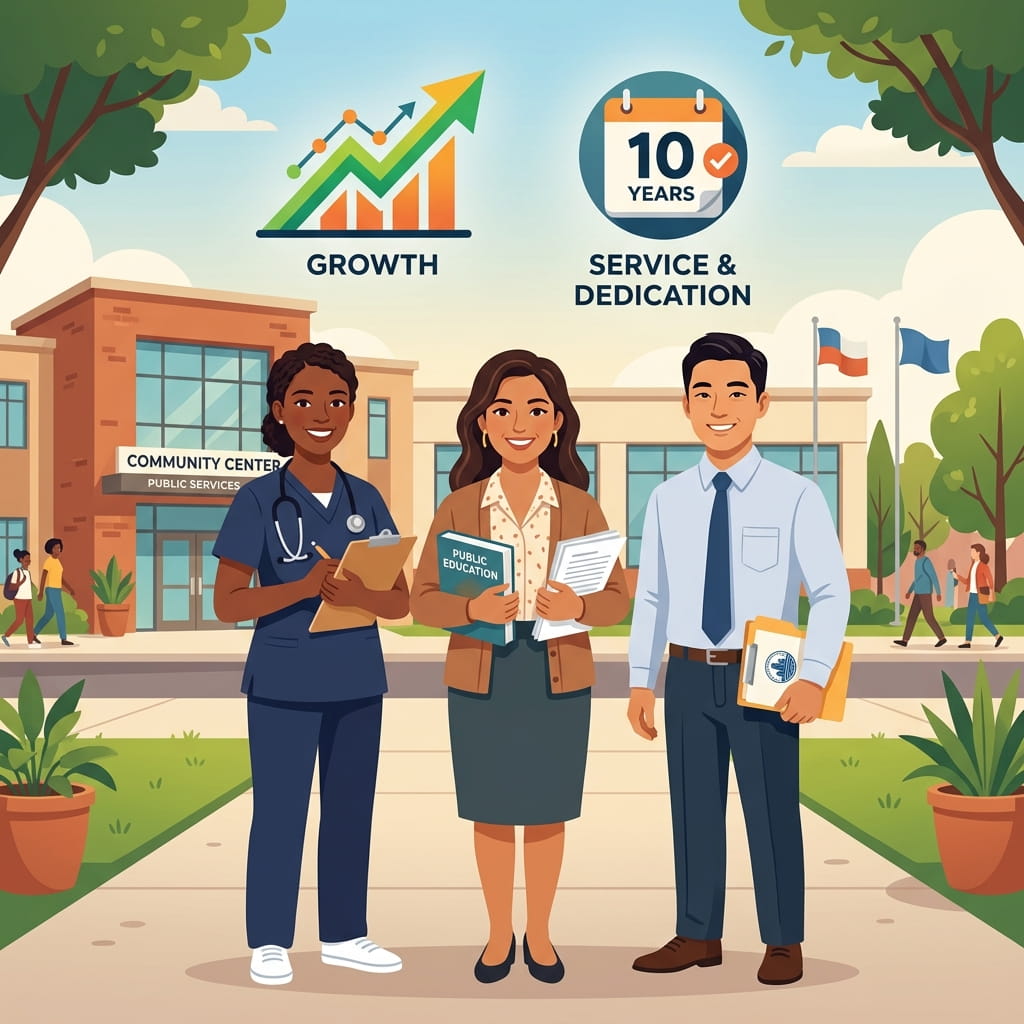
What changed in 2026: New PSLF regulations take effect July 1, 2026. Under these rules, the Department of Education can revoke an employer’s PSLF eligibility if that employer is found to be engaged in a “substantial illegal purpose.” Payments made in any month when your employer was disqualified won’t count toward your 120 payments. For the vast majority of borrowers at schools, hospitals, and city governments, nothing changes — but it’s wise to confirm your employer’s status annually.
PSLF eligibility 2026 checklist:
- You have federal Direct Loans (FFEL and Perkins loans must be consolidated first).
- You’re on a qualifying repayment plan (an income-driven plan or the Standard 10-year plan).
- You work full-time (at least 30 hours/week) for a qualifying employer.
- You make 120 separate, on-time qualifying payments.
The smartest move is to submit a PSLF form annually to certify your employment. This catches errors early. Don’t wait until year 10 to discover payments didn’t count.
Income-Driven Repayment Forgiveness
Income-driven repayment (IDR) plans set your monthly payment based on your income and family size. After a set period of qualifying payments, any remaining balance is forgiven — even if you never worked in public service.
This is where 2026 brings the biggest shake-up.
The SAVE plan is ending. Following court rulings, the SAVE plan has been wound down. Beginning around July 1, 2026, loan servicers will notify SAVE borrowers to switch to another plan, generally within 90 days. If you’re in SAVE, don’t ignore those notices.
Older IDR plans being phased out: Plans like PAYE and ICR are being retired for many borrowers as the system simplifies.
The new Repayment Assistance Plan (RAP): Starting July 1, 2026, borrowers can enroll in RAP, created under recent federal legislation. Key features:
- Payments range from 1% to 10% of your Adjusted Gross Income (AGI).
- Forgiveness comes after 30 years (360 qualifying payments) — longer than the 20–25 years under older plans.
- It may include interest subsidies that prevent your balance from ballooning.
The trade-off is clear: lower monthly payments but a longer road to forgiveness. For borrowers also chasing PSLF, RAP payments can count toward the 10-year PSLF timeline, which makes it attractive for public-service workers.
To see how interest affects your balance over decades, try our compound interest calculator before choosing a plan.
Teacher Loan Forgiveness
Teachers have a dedicated program separate from PSLF. Teacher Loan Forgiveness (TLF) can cancel up to $17,500 of your federal Direct or Stafford Loans.
Who qualifies:
- You must teach full-time for five complete and consecutive academic years.
- At least one of those years must be after the 1997–98 school year.
- You must work at a low-income school or educational service agency listed in the federal Teacher Cancellation Low Income (TCLI) Directory.
- You must be a “highly qualified” teacher under federal standards.
How much you can get:
- Up to $17,500 if you teach high school math or science, or work as a special education teacher.
- Up to $5,000 for most other eligible full-time teachers.
A key planning note: you generally cannot count the same five years of service toward both Teacher Loan Forgiveness and PSLF. Many teachers strategically claim TLF first, then continue working toward PSLF for the rest of their balance. Running the numbers carefully is essential — and a tool like our budget calculator helps you plan around the years before forgiveness arrives.
If you teach, keep your annual employment certifications and pay stubs organized. Documentation is the difference between approval and denial.
State-Based Forgiveness Programs
Beyond federal options, many U.S. states run their own forgiveness and repayment-assistance programs — often targeting professions facing shortages.
Common state programs include:
- Healthcare workers — nurses, doctors, dentists, and mental-health professionals who work in underserved areas.
- Lawyers — those in public-interest or legal-aid roles.
- Teachers — state-funded bonuses for working in high-need districts or subjects.
- Veterinarians and farmers in rural regions.
For example, the federal National Health Service Corps offers loan repayment to clinicians in shortage areas, with application notifications for recent cycles expected by late 2026. Many states layer their own programs on top.
For UK and EU readers: Formal “forgiveness” as known in the U.S. is rare. Instead, UK student loans are automatically written off after a set period. For Plan 2 borrowers, the write-off typically occurs 30 years after repayments begin; Plan 5 loans (for courses starting on or after August 1, 2023) are written off after 40 years. UK repayments are income-contingent — you only pay above an earnings threshold (rising to £29,385 for Plan 2 borrowers in England from April 2026). In much of the EU, loans are smaller and often subsidized, with hardship deferrals more common than outright cancellation.
Always check your national or state government website, as these programs change yearly and have limited funding.
How to Check If You Qualify (Step-by-Step)
Before applying, confirm your eligibility. Follow these steps:
Step 1 — Identify your loan type. Log in to your federal loan servicer (or StudentAid.gov in the U.S.). Only federal Direct Loans qualify for most forgiveness programs. Private loans are never eligible for federal forgiveness.
Step 2 — Check your employer. For PSLF, use the official PSLF Help Tool to confirm your employer qualifies. For teachers, verify your school appears in the TCLI Directory.
Step 3 — Review your repayment plan. Forgiveness requires being on a qualifying plan. If you’re in the ending SAVE plan, plan to transition to RAP or another IDR option in 2026.
Step 4 — Count your qualifying payments. Your servicer tracks these. Request your payment count in writing and keep records.
Step 5 — Confirm your work hours and dates. Most programs require full-time work and consecutive years of service.
Step 6 — Check tax implications. With the federal tax exemption expired in 2025, factor in any potential tax bill on forgiven amounts (PSLF remains tax-free).
Keep digital copies of every form, pay stub, and confirmation email in one folder. If a servicer changes (which happens often), your records protect you.
How to Apply for Student Loan Forgiveness
Applying is more manageable when you break it into clear actions:
- Gather documents. You’ll need your employer’s EIN (for PSLF), employment dates, pay records, and your loan account details.
- Complete the correct form.
- PSLF: Submit the PSLF & Employment Certification Form — ideally every year, and again when you hit 120 payments.
- Teacher Loan Forgiveness: Submit the TLF Application after five qualifying years, signed by your chief administrative officer.
- IDR forgiveness: This is often processed automatically once you reach the required payment count, but confirm with your servicer.
- Submit through official channels only. Apply directly via StudentAid.gov or your servicer. Never pay a third party that promises “guaranteed” forgiveness — these are common scams. Federal applications are always free.
- Track your application. Save confirmation numbers and follow up if you don’t hear back within 60–90 days.
- Keep paying until you’re notified. Stop only when you receive official confirmation that your loans are forgiven. Stopping early can cause delinquency.
While you wait for forgiveness, build financial security in other areas. Strengthening your emergency fund ensures one surprise expense won’t derail your progress.
FAQ: Common Questions About Forgiveness Programs
Q1: Does student loan forgiveness still exist in 2026?
Yes. PSLF, Teacher Loan Forgiveness, and income-driven repayment forgiveness all remain active in 2026, though rules have tightened. The new Repayment Assistance Plan (RAP) launches July 1, 2026, offering forgiveness after 30 years of payments.
Q2: How long does it take to get student loan forgiveness?
It depends on the program. PSLF takes 10 years (120 payments). Teacher Loan Forgiveness requires 5 years. Income-driven plans range from 20 to 30 years, with RAP requiring 30 years of qualifying payments.
Q3: Will forgiven student loans be taxed in 2026?
Possibly. The federal tax exemption on forgiven student debt expired at the end of 2025, so some forgiven balances may now count as taxable income. PSLF forgiveness remains tax-free. State tax rules vary, so consult current IRS and state guidance.
Q4: Do private student loans qualify for forgiveness?
No. Federal forgiveness programs apply only to federal loans. Private loan borrowers should explore refinancing, hardship programs, or negotiating directly with their lender.
Q5: What happens to my SAVE plan in 2026?
The SAVE plan is being phased out. Around July 1, 2026, servicers will notify SAVE borrowers to switch to another plan, usually within 90 days. Don’t ignore these notices, as missing the window could pause your progress toward forgiveness.
Conclusion
Student loan forgiveness is still very much alive in 2026 — but staying informed is your greatest advantage. Here are the top three takeaways:
- Know your program. PSLF (10 years), Teacher Loan Forgiveness (5 years), and IDR/RAP forgiveness (20–30 years) each have distinct rules and timelines.
- Watch the 2026 changes. The SAVE plan is ending, RAP begins July 1, and new PSLF employer rules take effect — so review your plan now.
- Apply through official, free channels and certify your employment yearly to protect your progress.
💾 Save this guide so you can revisit each deadline as it approaches.
👉 Read next: https://shafayat.com/retirement-savings-calculator/ — once your loans are handled, start building long-term wealth.
A quick note: because U.S. student loan rules are changing significantly through July 2026 and beyond, encourage readers (and verify yourself) against StudentAid.gov and official government sources before publishing, since specific thresholds and dates may be updated after my knowledge cutoff.
