
Introduction
Americans ended 2025 carrying $1.39 trillion in credit card debt — an all-time record. The average U.S. household now owes roughly $11,500 on credit cards alone, and the picture across the Atlantic is not much brighter: U.K. credit card balances hit new highs last year, while household debt across the EU hovers near 81% of GDP. If you are reading this while juggling multiple balances, you are far from alone.
The good news? Two proven repayment strategies have helped millions of people dig out: the debt snowball vs debt avalanche method. One prioritizes quick psychological wins; the other focuses on cold, hard math. Both work — but they work differently, and choosing the right one could save you hundreds or even thousands in interest.
In this guide, you will learn exactly how each method works, see a real side-by-side comparison with actual numbers, and discover which strategy fits your personality, your budget, and your goals. By the end, you will have a clear action plan you can start tonight — no financial advisor required.
Table of Contents
- What Is the Debt Snowball?
- What Is the Debt Avalanche?
- Debt Snowball vs Debt Avalanche: Side-by-Side Comparison
- Which Debt Repayment Method Is Better for You?
- Real Example With Numbers: Snowball vs Avalanche
- How to Start Paying Off Debt Today
- Common Mistakes to Avoid With Either Method
- FAQ
What Is the Debt Snowball?
The debt snowball method, popularized by personal finance author Dave Ramsey, is built on one core idea: pay off your smallest balance first, regardless of interest rate.
Here is how it works in practice:
- Step 1: List every debt you owe from the smallest balance to the largest.
- Step 2: Make minimum payments on all debts except the smallest one.
- Step 3: Throw every extra dollar you can toward that smallest debt until it is gone.
- Step 4: Once the smallest debt is paid off, roll its entire payment into the next-smallest debt.
- Step 5: Repeat until every debt is eliminated.
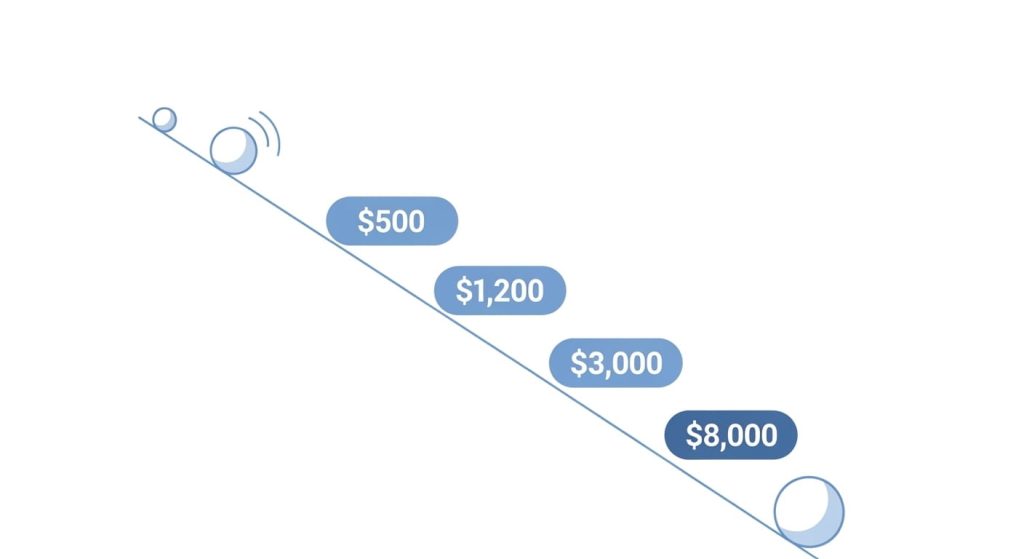
The power of this approach is psychological. A 2016 study published in the Harvard Business Review by researchers Remi Trudel and others found that consumers who concentrated on paying off individual accounts one at a time repaid their overall debt roughly 15% faster than those who spread extra payments across all accounts. The reason? Small wins create momentum. Each balance you eliminate feels like a genuine victory, which fuels the motivation to keep going.
The snowball method does not always save you the most in interest charges — and that is its main trade-off. But for people who have tried and failed to stick with a debt payoff plan before, the behavioral advantage can outweigh the mathematical cost. The best repayment plan is ultimately the one you actually follow through on.
If you are new to managing your budget while paying down debt, our guide on budgeting basics can help you free up extra cash each month: Read more
What Is the Debt Avalanche?
The debt avalanche method takes the opposite approach. Instead of targeting the smallest balance, you attack the debt with the highest interest rate first.
The steps are nearly identical to the snowball:
- Step 1: List all your debts from the highest interest rate to the lowest.
- Step 2: Make minimum payments on every debt.
- Step 3: Direct all extra money toward the debt with the highest APR.
- Step 4: When that debt is cleared, move the full payment amount to the next-highest-rate debt.
- Step 5: Continue until you are debt-free.
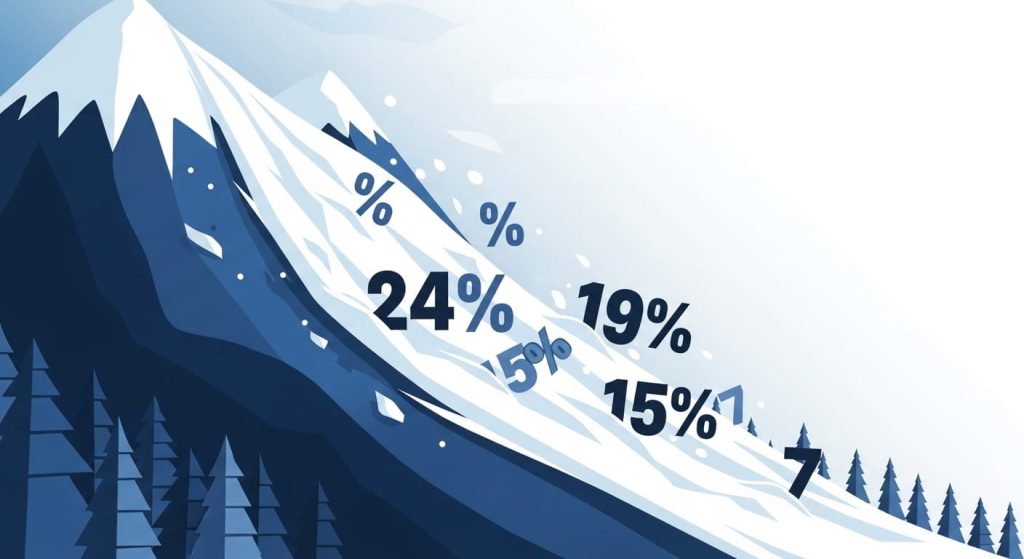
From a pure mathematics standpoint, the avalanche method is superior. By eliminating high-interest debt first, you reduce the total amount of interest that compounds against you each month. On $25,000 in total debt, choosing the avalanche over the snowball typically saves between $1,000 and $3,000 over the full payoff period, according to analysis from multiple financial planning firms.
Consider today’s interest rate environment. The average U.S. credit card APR sat at roughly 21–24% through 2025, while the average U.K. credit card rate climbed above 24%. At those rates, even a few months of carrying a high-interest balance adds up fast. The avalanche method directly addresses this by shrinking your most expensive debts first.
The downside? It can feel slow at the beginning. If your highest-rate debt also happens to be your largest balance, you might go months — or even more than a year — before you see a single debt disappear from your list. For some people, that long wait erodes motivation and leads to giving up entirely.
Debt Snowball vs Debt Avalanche: Side-by-Side Comparison
Choosing between the debt snowball vs debt avalanche comes down to a handful of critical differences. Here is a clear, honest breakdown:
| Factor | Debt Snowball | Debt Avalanche |
|---|---|---|
| Order of payoff | Smallest balance first | Highest interest rate first |
| Total interest paid | Higher | Lower |
| Time to first win | Faster (days to weeks) | Slower (weeks to months) |
| Best for motivation | Yes | Not always |
| Mathematically optimal | No | Yes |
| Recommended by | Dave Ramsey, behavioral researchers | Most financial planners, mathematicians |
Both methods share the same foundational rules: you make minimum payments on all debts, you direct all extra funds toward one target debt at a time, and you “roll” freed-up payments into the next target once a debt is eliminated. The only difference is the order in which you line up your debts.
Research from a JMU Scholarly Commons paper analyzing the two strategies concluded that while the avalanche method is mathematically superior in the majority of scenarios, the snowball method is “a very close competitor” — meaning the interest savings of the avalanche are often smaller than people expect, especially when debt balances and interest rates are relatively similar.
The real takeaway from this comparison is that neither method is wrong. The gap in total interest paid between the two strategies frequently amounts to just a few hundred dollars on moderate debt loads. What matters far more is consistency. A strategy you abandon after two months saves you nothing.
Which Debt Repayment Method Is Better for You?
There is no universal answer — but there are clear signals that point you toward one method or the other.
The debt snowball is likely better for you if:
You have struggled with debt repayment before and quit. You thrive on visible progress and quick results. You carry several small debts (under $1,000 each) alongside larger ones. You need an emotional boost to stay on track. You are new to personal finance and want simplicity.
The debt avalanche is likely better for you if:
You are disciplined and do not need quick wins to stay motivated. You have one or two debts with significantly higher interest rates than the rest. You carry large balances where interest savings compound meaningfully. You are comfortable with spreadsheets and tracking numbers. You want to minimize total cost above all else.
There is also a hybrid approach worth considering. Some financial planners recommend starting with the snowball method to build momentum — knocking out one or two small debts quickly — and then switching to the avalanche for the remaining, larger balances. This gives you the psychological boost of early wins combined with the interest savings of targeting high-rate debts.
Whatever you choose, the foundation is the same: you need a workable monthly budget with extra money earmarked specifically for debt repayment. Even an extra $100 to $200 per month accelerates either strategy dramatically. If your budget is tight, consider ways to earn extra income on the side. Our money-making ideas guide covers realistic options: Read more
Real Example With Numbers: Snowball vs Avalanche
Let’s put real numbers on the table. Imagine you have four debts:
| Debt | Balance | APR | Minimum Payment |
|---|---|---|---|
| Store credit card | $800 | 26% | $25 |
| Personal loan | $3,500 | 15% | $100 |
| Credit card A | $5,200 | 22% | $130 |
| Credit card B | $7,500 | 19% | $190 |
Total debt: $17,000. You have $700 per month available for all debt payments combined. After covering all minimums ($445), you have $255 in extra cash to throw at your target debt each month.
With the Debt Snowball (smallest balance first):
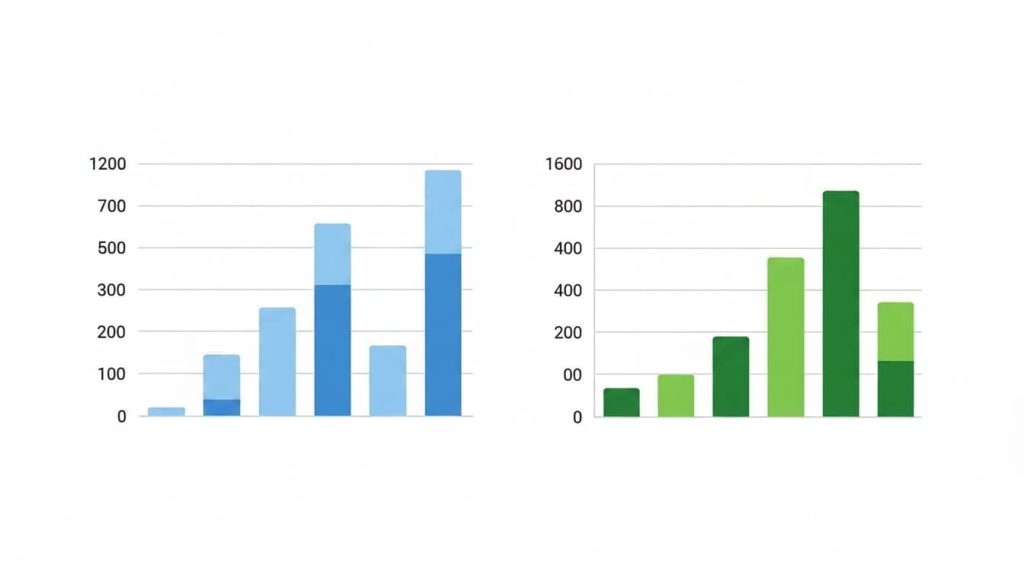
You attack the $800 store card first, paying $280/month toward it ($25 minimum + $255 extra). It is gone in about three months. That quick win frees up $280, which you roll into the $3,500 personal loan. Progress accelerates, and the motivational feedback loop kicks in. Under this scenario, you are debt-free in approximately 28 months and pay roughly $3,450 in total interest.
With the Debt Avalanche (highest rate first):
You attack the $800 store card first here too (it happens to have the highest rate at 26%). Next, you move to Credit Card A at 22%, then Credit Card B at 19%, and finally the personal loan at 15%. You are debt-free in approximately 27 months and pay roughly $3,080 in total interest.
The difference: about one month and approximately $370 in interest.
In this realistic scenario, the avalanche saves money — but the gap is modest. On larger debt loads with wider interest rate spreads (for example, a 6% car loan sitting alongside a 24% credit card), the avalanche advantage grows considerably. On smaller, more uniform debts, the difference shrinks to the point where the motivational advantage of the snowball may genuinely matter more.
The key lesson: run your own numbers. Free calculators from NerdWallet, Bankrate, and others let you input your exact debts and see both results side by side in minutes.
How to Start Paying Off Debt Today
Knowing the theory is only half the battle. Here is a concrete, step-by-step plan to go from reading this article to making your first extra payment.
Step 1 — Gather every debt. Log in to all your accounts and record the current balance, interest rate, and minimum payment for each. Include credit cards, personal loans, car loans, medical bills, buy-now-pay-later balances, and student loans. Missing even one debt can derail your plan.
Step 2 — Choose your method. Based on everything you have read, decide whether the snowball, avalanche, or hybrid approach fits your personality and financial situation.

Step 3 — Build a bare-bones budget. Track your income and essential expenses for one month. Identify every non-essential category you can temporarily reduce — subscriptions, dining out, impulse shopping. The goal is to find the maximum extra amount you can consistently throw at debt each month.
Step 4 — Automate your payments. Set up autopay for every minimum payment so you never miss one (missed payments damage your credit score and trigger late fees). Then set a separate manual or automatic transfer for your extra payment toward your target debt.
Step 5 — Track and celebrate. Use a spreadsheet, an app, or even a hand-drawn chart on your wall. Every time a debt hits zero, take a moment to acknowledge it. That sense of accomplishment is real fuel.
Step 6 — Avoid new debt. This is the hardest part. Consider putting credit cards in a drawer — or freezing them in a literal block of ice. Switch to cash or a debit card for daily spending until your debts are cleared.
For more practical tips on saving money and building an emergency fund while paying off debt, check out: Read more
Common Mistakes to Avoid With Either Method
Even with the right strategy, people sabotage their debt payoff journey in predictable ways. Avoid these common traps.
Ignoring minimum payments on other debts. Both the snowball and avalanche methods require you to keep paying minimums on every balance. Missing a payment triggers late fees, penalty APRs, and credit score damage that makes the problem worse.
Not having an emergency fund. If you throw every spare cent at debt and then your car breaks down, you will reach for a credit card and end up back where you started. Most experts recommend building at least $1,000 in emergency savings before aggressively attacking debt. Once your high-interest debts are cleared, you can grow that fund to three to six months of expenses.
Constantly switching methods. Jumping from snowball to avalanche and back again every few weeks means you never build momentum in either direction. Pick one approach, commit for at least 90 days, and evaluate from there.
Forgetting to account for irregular expenses. Annual insurance premiums, holiday spending, and car registration fees catch people off guard. Build these into your budget so they do not blow up your repayment plan.
Not celebrating milestones. Paying off debt is a marathon. If you never acknowledge progress, burnout is inevitable. Celebrate responsibly — a home-cooked special dinner, a free day trip, or simply updating your debt tracker with a satisfying zero.
FAQ
Is the debt snowball or debt avalanche better for credit card debt?
Both methods work well for credit card debt specifically. If your credit cards have similar interest rates (which is common — many cards charge between 20% and 26% APR), the snowball method is often the more practical choice because the interest savings of the avalanche will be minimal, while the motivational boost of quick wins can keep you on track. If one card has a significantly higher rate than the others, prioritizing it with the avalanche approach makes more financial sense.
Can I combine the debt snowball and debt avalanche methods?
Yes, and many financial advisors recommend this hybrid approach. Start by paying off one or two of your smallest debts quickly using the snowball method to build confidence and momentum. Then switch to the avalanche method for your remaining, larger debts to minimize interest costs. This “best of both worlds” strategy works especially well for people with a mix of small and large balances at varying interest rates.
How much faster does the debt avalanche pay off debt compared to the snowball?
It depends entirely on your specific debts. On moderate debt loads ($10,000 to $25,000), the avalanche typically pays off debt one to three months faster and saves $300 to $3,000 in total interest. However, research from LendingTree found that in many real-world scenarios, the two methods are “equally effective” in terms of timeline. The largest savings occur when there is a big spread between your highest and lowest interest rates.
Should I pay off debt or save money first?
The general recommendation from most financial planners is to build a small emergency fund first — typically $1,000 to $2,000 — before attacking debt aggressively. This prevents you from needing to take on new debt when unexpected expenses arise. Once your high-interest debts are cleared, shift your focus to building a full emergency fund of three to six months’ worth of expenses and then to investing for the future.
Does paying off debt with the snowball method hurt my credit score?
No. Paying off debt with either method improves your credit score over time. As you reduce your credit utilization ratio (the percentage of your available credit you are using), your score goes up. Closing accounts after paying them off can sometimes cause a temporary dip, so consider keeping paid-off credit card accounts open with a zero balance to maintain your available credit line.
Conclusion
The debate between the debt snowball vs debt avalanche comes down to three core truths. First, the avalanche method saves more money in interest — that is a mathematical fact. Second, the snowball method keeps more people motivated and on track — that is a behavioral fact backed by Harvard Business Review research. Third, either method beats no method at all, and the best strategy is the one you will actually stick with for months or years until the last balance hits zero.
You now have the knowledge, the comparison, and a step-by-step plan. The only thing left is to start.
Save this guide and revisit it whenever you need a motivational push. And when you are ready for your next step toward financial freedom, read next
