
Introduction
Nearly 6 in 10 adults in the United States feel uncomfortable with their level of emergency savings, according to Bankrate’s 2024 Annual Emergency Savings Report. In the UK, the Money and Pensions Service estimates that 11.5 million adults have less than £100 in savings. Across the EU, Eurostat data shows household saving rates fluctuating between 12% and 15% — better than the US, but still leaving millions financially vulnerable.
If you’ve been searching for a smarter way to manage your money, the 50/30/20 vs zero based budget debate is one of the most useful conversations in personal finance today. Both methods are proven, free to use, and recommended by financial educators worldwide — but they work in very different ways.
By the end of this guide, you’ll understand exactly how each method works, which one fits your income level, the real numbers behind their effectiveness, and how to choose the right system for your lifestyle. You’ll also get free templates for both methods so you can start budgeting today.
Table of Contents
- Two Popular Budgeting Methods — One Clear Winner?
- How the 50/30/20 Rule Works (Summary)
- How Zero-Based Budgeting Works (Summary)
- Side-by-Side Comparison Table
- Which Method Is Better for Low Incomes?
- Which Method Is Better for High Earners?
- Our Recommendation: When to Use Each
- Free Templates for Both Methods
- FAQs
- Conclusion
Two Popular Budgeting Methods — One Clear Winner?
Budgeting is no longer a luxury — it’s a survival skill. A 2024 NerdWallet study found that 84% of Americans who follow a written budget stick to it, compared to just 32% of those who try to track spending mentally. Similar patterns appear in UK and EU surveys: people who write down their budgets save, on average, 20% more than those who don’t.
The two most recommended frameworks among financial planners are the 50/30/20 rule, popularized by US Senator Elizabeth Warren in her book All Your Worth, and zero-based budgeting (ZBB), originally developed for corporate finance and later adapted for households by educators like Dave Ramsey and YNAB (You Need A Budget).
So which is better? The honest answer: it depends on your income, discipline, and financial goals. The 50/30/20 rule is simple and forgiving — perfect for beginners. Zero-based budgeting is more demanding but tends to produce stronger savings results because every single unit of currency is assigned a job.
In the next sections, we’ll break down exactly how each one works, then compare them across the metrics that matter most.
How the 50/30/20 Rule Works (Summary)
The 50/30/20 rule is a percentage-based budget that splits your after-tax income into three buckets:
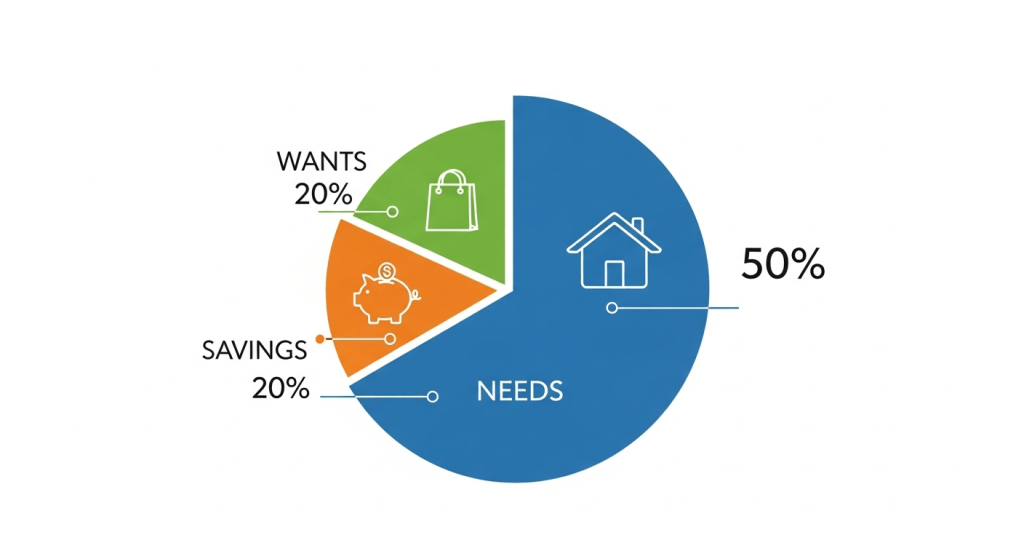
- 50% Needs — rent or mortgage, groceries, utilities, insurance, transportation, minimum debt payments.
- 30% Wants — dining out, streaming subscriptions, hobbies, travel, non-essential shopping.
- 20% Savings & Debt Repayment — emergency fund, retirement, investments, and extra debt payments beyond the minimum.
Example (US $4,000 monthly take-home pay):
- Needs: $2,000
- Wants: $1,200
- Savings/Debt: $800
Why People Like It
It’s easy to remember, requires little tracking, and works well for anyone earning a steady middle-class salary. According to a 2023 Charles Schwab Modern Wealth Survey, 49% of Americans who budget use some form of the 50/30/20 framework — making it the most popular method in the country.
Where It Falls Short
The rule assumes housing and essentials cost no more than 50% of income. In high-cost cities like London, New York, Paris, or Dublin, “needs” alone can eat up 60–70% of take-home pay, making strict adherence difficult.
If you’re new to budgeting, you can read more on https://shafayat.com/category/budgeting/ for beginner-friendly walkthroughs.
How Zero-Based Budgeting Works (Summary)
Zero-based budgeting follows one core rule: Income − Expenses = 0.
That doesn’t mean you spend everything you earn. It means every dollar, pound, or euro is assigned a specific job — including savings and investments — until nothing is left unaccounted for.
How to Build a Zero-Based Budget
- Write down your total monthly income.
- List every expected expense for the month: rent, food, transport, subscriptions, debt, savings, investments, gifts, even haircuts.
- Assign amounts until your income minus expenses equals zero.
- Track spending throughout the month and adjust categories as needed.
Example (£3,000 monthly take-home pay):
- Rent: £1,000
- Groceries: £300
- Transport: £150
- Utilities: £180
- Insurance: £90
- Debt payment: £250
- Emergency fund: £300
- Retirement (SIPP/Pension): £400
- Entertainment: £150
- Miscellaneous: £180
- Total: £3,000 → £0 left
Why It Works
A 2022 study by YNAB reported that new users save an average of $600 in the first two months of zero-based budgeting. The method forces awareness of every transaction, which reduces “leakage” spending — those small purchases that quietly drain accounts.
The Trade-Off
ZBB takes 20–40 minutes per week to maintain. It’s powerful, but it’s not passive.
Side-by-Side Comparison Table
| Feature | 50/30/20 Rule | Zero-Based Budget |
|---|---|---|
| Difficulty | Easy | Moderate to advanced |
| Time per week | 5–10 minutes | 20–40 minutes |
| Best for | Beginners, stable incomes | Goal-driven savers, debt payoff |
| Flexibility | High | Medium |
| Tracking required | Light | Detailed |
| Average savings rate | ~15–20% of income | ~20–30% of income |
| Works for irregular income? | Limited | Excellent |
| Risk of overspending | Moderate | Low |
| Tools needed | Spreadsheet or app | Spreadsheet, YNAB, EveryDollar |
| Learning curve | Minutes | A few weeks |
The numbers above are based on aggregated data from NerdWallet, YNAB, and the US Bureau of Labor Statistics Consumer Expenditure Survey (2023).
Which Method Is Better for Low Incomes?
For people earning below their region’s median income, budgeting choices matter even more. The US Bureau of Labor Statistics reports that households in the lowest income quintile spend roughly 40% of after-tax income on housing alone — far above the 50/30/20 rule’s “needs” allocation when combined with food and utilities.

In the UK, the Office for National Statistics (ONS) shows that the bottom 20% of earners spend about 54% of disposable income on essentials. The 50/30/20 rule simply doesn’t fit these realities.
Why Zero-Based Budgeting Wins Here
When money is tight, every dollar must work hard. Zero-based budgeting helps low-income households by:
- Eliminating “invisible” spending on subscriptions, fees, and impulse buys.
- Forcing prioritization between competing essentials.
- Making it possible to save even £20–£50 per month consistently.
Practical Tip
If you’re on a low or irregular income, consider a modified zero-based budget built around your lowest expected monthly income. Any extra income that month goes straight to savings or debt — a strategy popular among freelancers and gig workers.
For more strategies, explore https://shafayat.com/category/save-money/.
Which Method Is Better for High Earners?
High earners face a different problem: lifestyle inflation. A 2024 LendingClub report found that 48% of Americans earning over $100,000 still live paycheck to paycheck. In the EU, ECB household finance surveys show similar patterns among professionals in cities like Frankfurt, Amsterdam, and Stockholm.
Why the 50/30/20 Rule Often Suffices
If your essentials genuinely consume less than 50% of your income, the 50/30/20 rule provides a healthy structure without micromanagement. A high earner with $10,000 monthly take-home pay following the rule would automatically save $2,000 per month — that’s $24,000 annually before any employer match or investment growth.
When Zero-Based Budgeting Helps More
High earners with ambitious goals — early retirement, real estate, business investment — often outgrow the 50/30/20 rule. ZBB lets them direct surplus income toward specific objectives instead of letting it drift into “wants.”
A common hybrid: use 50/30/20 as the baseline, then apply zero-based logic to the 20% savings bucket, splitting it into precise categories like emergency fund, index funds, retirement accounts, and a property down payment.
Learn more about long-term wealth building on https://shafayat.com/category/investing/.
Our Recommendation: When to Use Each
There is no universally “best” method — only the best one for your situation. Here’s a practical framework:
Use the 50/30/20 Rule If You:
- Are new to budgeting and need something simple.
- Have a stable monthly salary.
- Live in an area where housing costs are below 35% of income.
- Want a low-maintenance system you’ll actually follow.
Use Zero-Based Budgeting If You:
- Are aggressively paying off debt.
- Have irregular or freelance income.
- Want to maximize savings rate (25%+).
- Are working toward a specific financial goal like a home, FIRE (Financial Independence, Retire Early), or starting a business.
- Don’t mind spending 20–30 minutes a week reviewing your money.
The Hybrid Approach
Many financial coaches now recommend starting with 50/30/20 for the first 3–6 months to build the habit, then graduating to zero-based budgeting once you understand your spending patterns. This combines simplicity with precision and tends to produce the highest long-term savings rates.
Free Templates for Both Methods
You don’t need expensive software to start. Here are simple templates you can build in any spreadsheet program:
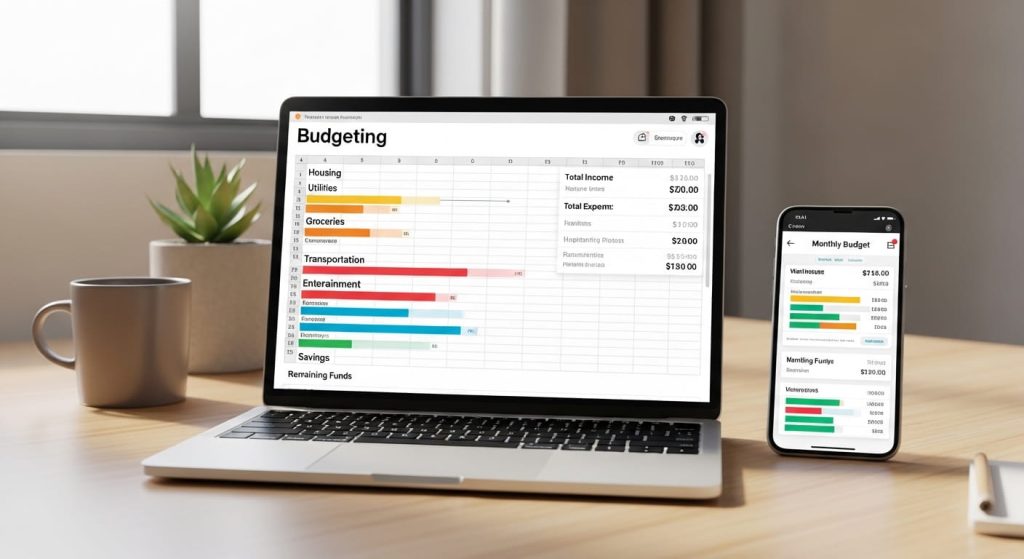
50/30/20 Template Columns:
- Monthly take-home income
- Needs (50%) — itemized list
- Wants (30%) — itemized list
- Savings/Debt (20%) — itemized list
- Actual vs. Planned variance
Zero-Based Template Columns:
- Income source(s)
- Category (Housing, Food, Transport, Insurance, Debt, Savings, Investing, Entertainment, Misc.)
- Planned amount
- Actual amount
- Difference
- Notes
Free Tools That Support Both Methods
- Google Sheets or Microsoft Excel — fully customizable.
- YNAB — built around zero-based principles (paid, with free trial).
- EveryDollar — free tier supports zero-based budgeting.
- Monarch Money and PocketGuard — work for both methods.
Pick the tool you’ll actually open every week. The “best” budget is the one you maintain.
FAQs
1. Which budgeting method saves more money on average?
Zero-based budgeting tends to produce higher savings rates — typically 20–30% of income — because every unit of money is intentionally assigned. The 50/30/20 rule averages around 15–20% but requires far less effort.
2. Can I switch between methods?
Yes. Many people start with 50/30/20 to build awareness and switch to zero-based budgeting once they want more control. You can also alternate seasonally — for example, use ZBB during debt payoff and 50/30/20 during stable periods.
3. Does the 50/30/20 rule work in expensive cities?
Often it doesn’t, at least not strictly. In cities where rent alone exceeds 40% of take-home pay, you may need to adjust the ratios — say, 60/20/20 or 65/15/20 — until your income or expenses change.
4. Is zero-based budgeting good for couples?
Yes. Couples often benefit because ZBB requires conversation about every category, reducing money-related conflict. Studies from Ramsey Solutions (2023) suggest couples using ZBB report 33% fewer arguments about money.
5. Do these methods include retirement contributions?
Both can. In 50/30/20, retirement falls inside the 20% savings bucket. In zero-based budgeting, retirement is its own line item, which often results in larger and more consistent contributions over time.
Conclusion
The choice between 50/30/20 vs zero based budget comes down to three things: simplicity, savings goals, and how much time you’re willing to spend. The 50/30/20 rule offers a clear, forgiving structure ideal for beginners and stable earners. Zero-based budgeting demands more work but consistently produces higher savings rates and faster debt payoff. The smartest approach for many people is a hybrid — start simple, then upgrade as your goals grow.
Top 3 takeaways:
- Pick the method you’ll actually maintain — consistency beats perfection.
- Adjust the ratios to your real cost of living, not the textbook version.
- Reassess your budget every 3–6 months as life changes.
Save this guide and read next: https://shafayat.com/category/save-money/
Disclaimer: This article is for informational purposes only and does not constitute financial advice. Always consult a qualified financial professional before making decisions based on your personal circumstances.
